


Quick answer
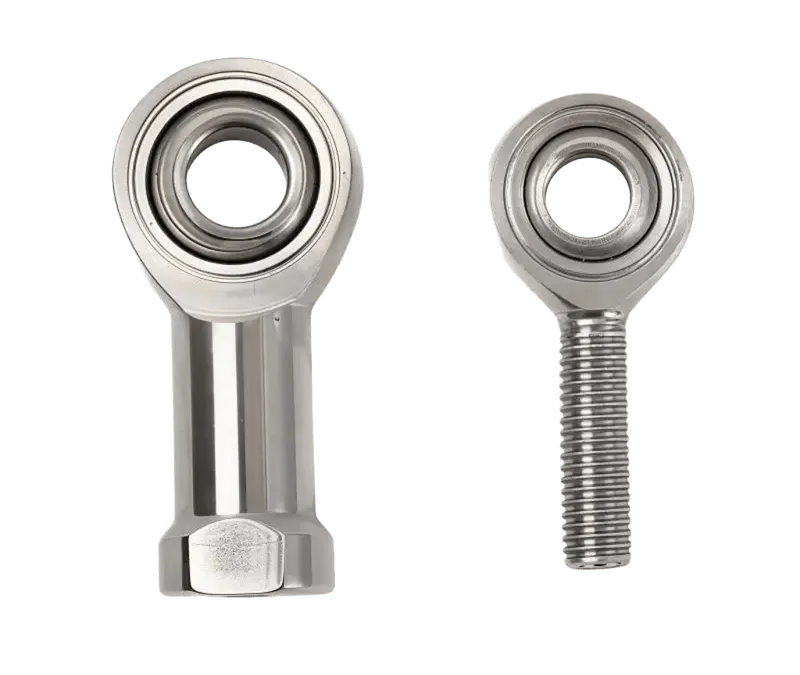
A heim joint is commonly used as another name for a rod end bearing, especially in North American linkage, motorsport, steering and control-arm discussions. In a technical specification, the safer wording is usually “rod end bearing” plus the bore, thread, thread direction, material, liner structure, and load requirement.
The naming difference matters because the same joint may appear in a drawing, catalog, replacement request or maintenance note under different terms. The part may be functionally similar, but the details decide whether it fits the linkage.
Why the names get mixed
The term “Heim joint” comes from HEIM Bearings, a well-known rod end bearing brand now associated with RBC Bearings. RBC still catalogs products as Heim rod end bearings, which helps explain why “heim joint” is often used as common language for a rod end style linkage bearing.
Other bearing manufacturers and standards bodies usually use the more generic term “rod end” or “rod end bearing.” SKF, for example, groups rod ends under spherical plain bearings and rod ends. ISO 12240-4 covers spherical plain bearing rod ends and specifies dimensions, tolerances, and radial internal clearances.
For LINOX inquiries, either wording is understandable. The important step is to translate the name into a real specification.
Heim joint vs rod end bearing comparison
| Point to compare | Heim joint | Rod end bearing |
|---|---|---|
| Common meaning | Common name for an articulated linkage joint with a spherical ball | Generic engineering and catalog term for the same broad part family |
| Search usage | Frequent in North America, motorsport, steering and custom linkage language | Frequent in industrial catalogs, ISO-style documents, drawings and RFQs |
| Structure | Housing with shank, spherical ball or bearing insert, male or female thread | Housing with shank, spherical ball or bearing insert, male or female thread |
| What can go wrong | The name is treated as enough information | Series, thread direction or inch/metric replacement details are missed |
| Best wording | Useful when matching customer language or replacement requests | Best for drawings, RFQs, material specifications and technical comparison |
| Stainless review points | Housing grade, ball material, thread galling, liner and mating hardware | Housing grade, ball material, thread galling, liner and mating hardware |
In most sourcing situations, “heim joint vs rod end bearing” is not a choice between two completely different product families. It is a terminology check. The real choice is male or female thread, inch or metric series, lubricated or maintenance-free structure, and the stainless material combination.
What to confirm before treating them as interchangeable
Do not approve a replacement only because the name looks familiar. A part called a heim joint in one drawing can still differ from another rod end in several ways.
Confirm these details before ordering:
- Bore diameter and mating pin size.
- Male or female thread.
- Right-hand or left-hand thread.
- Thread size and pitch, including inch or metric standard.
- Center-to-end length or housing dimensions if the linkage geometry is fixed.
- Ball width, housing width, and available misalignment angle.
- Liner style: PTFE-lined, bronze race, steel-on-steel, or other custom structure.
- Material requirement for housing, ball, nut, washer and pin.
- Load direction, duty cycle and whether the joint sees vibration or shock.
For stainless steel rod ends, the surrounding hardware matters as much as the bearing. A 316 stainless housing can still perform poorly if the jam nut, washer, pin or bracket corrodes first.
Where stainless steel changes the decision
Many commercial heim joints and rod end bearings are made from carbon steel, alloy steel, plated steel or chrome-plated components. Those options can be practical in dry or protected environments, but they may not be the best fit for salt spray, washdown, food machinery, chemical exposure or outdoor equipment.
LINOX focuses on stainless steel rod end bearings and related motion components for corrosive service. The material decision is often a mixed-material decision, not a single grade stamped across every part.
| Component | Common stainless review | Why it matters |
|---|---|---|
| Housing | 304 or 316 stainless, depending on exposure | Controls corrosion resistance around the shank and outer body |
| Spherical ball | 440C or another hard stainless option where wear is critical | Needs hardness and smooth movement under contact pressure |
| Liner or race | PTFE-lined, bronze race or lubricated structure | Controls friction, maintenance interval and movement feel |
| Thread and nut | Stainless pairing plus lubricant or anti-seize review | Reduces thread galling and seized adjustment hardware |
| Pin and bracket | Compatible material and fit | Prevents corrosion or looseness from moving to the mating parts |
If the application is marine, start by reviewing the 316 vs 304 stainless steel bearing guide. If the failure is at the threaded area, review stainless steel rod end thread galling before changing only the bearing body.
Male, female, inch and metric naming
The name “heim joint” does not tell you whether the part has a male or female thread. It also does not tell you whether the part follows an inch replacement pattern, a metric SA/SI style series, or a custom drawing.
For LINOX stainless rod ends, the part family is normally narrowed this way:
- Male thread rod end: the shank has an external thread.
- Female thread rod end: the shank has an internal thread.
- Metric series: common for industrial machinery, automation and many export drawings.
- Inch series: common for replacement projects, North American equipment and legacy linkages.
- Maintenance-free style: often reviewed when greasing is difficult or contamination must be reduced.
- Lubricated style: often reviewed when load is high and scheduled maintenance is available.
If you are replacing an existing joint, send the old part number, drawing or measured sample. A photo alone usually cannot confirm thread direction, thread pitch, bore tolerance or ball width.
When a rod end is different from a spherical plain bearing
A rod end bearing includes a housing and shank, so it can be mounted directly into a linkage. A radial spherical plain bearing is normally a bearing insert without the threaded shank housing. It may need a separate housing, bracket or machined bore.
That difference affects procurement. If your assembly needs a threaded linkage end, a stainless steel rod end is usually the starting point. If your assembly already has a housing and only needs the spherical bearing element, a spherical plain bearing may be the better starting point.
The two product families can use similar bearing principles, but they are not ordered the same way.
Application examples
In marine steering, the part may be described as a stainless heim joint because the linkage looks like a common steering joint. LINOX would still review it as a stainless rod end bearing and confirm housing material, ball material, thread direction, bore, pin fit and saltwater exposure.
For food or washdown machinery, the search term may be “stainless rod end” rather than “heim joint.” The part still needs the same checks: corrosion resistance, cleanability, lubricant plan, liner suitability and compatible nuts or pins.
For motorsport or outdoor equipment, “heim joint” is common language. If corrosion is the reason for changing material, do not assume a plated steel replacement and a stainless replacement can be selected only by thread size. Check width, angle, liner and load rating as well.
How to specify the part
Once the terminology is clear, specify the part by dimensions, material and operating conditions. The following details are usually more useful than the name alone:
- Product name used on the drawing or old package.
- Bore diameter and pin size.
- Male or female thread.
- Thread size, pitch and right-hand or left-hand direction.
- Housing width, ball width and center-to-end dimension.
- Material preference: 304, 316, 440C, 17-4PH or custom.
- Liner preference: maintenance-free, lubricated or existing equivalent.
- Operating environment: indoor, outdoor, salt spray, washdown, chemical exposure or food machinery.
- Load direction, movement angle and whether the joint is safety-critical.
- Photos, drawing, failed sample or current part number.
For custom stainless linkage assemblies, include the mating nut, washer, bracket and pin information. This helps avoid solving corrosion at the bearing while leaving the adjacent hardware as the weak point.
If the same part is known under both terms, write both in the request. For example: “stainless steel rod end bearing / heim joint replacement” followed by the bore, thread, material, liner and application details.
Common points of confusion
In most industrial and replacement conversations, a heim joint refers to the rod end bearing style of linkage joint. The exact dimensions and material requirements still need to be checked rather than relying only on the name.
Not all heim joints are stainless steel. Many use carbon steel, alloy steel, plated steel or mixed materials. If corrosion resistance matters, specify the stainless housing grade, ball material, nut material and operating environment.
LINOX can review old samples, drawings or photos, but a photo alone is rarely enough. Measurements, thread details, material requirements and failure information help separate a simple replacement from a material or design improvement.
How LINOX reviews the request
Use the term your drawing, maintenance note or replacement request already uses, then define the part like an engineering component. For a stainless heim joint or rod end bearing, the correct selection depends on bore, thread, direction, series, material, liner, load, movement angle and exposure.
If the part may be a rod end, heim joint or spherical plain bearing, start with the stainless steel rod ends page and send the drawing or sample details through the inquiry form.
Reference notes
- RBC Bearings, RBC Heim Rod End Bearing product data, for HEIM rod end bearing catalog terminology and specification fields.
- SKF, Rod ends, for general rod end terminology and product grouping.
- ISO, ISO 12240-4:1998, for spherical plain bearing rod end dimensions and tolerances.