


Quick answer
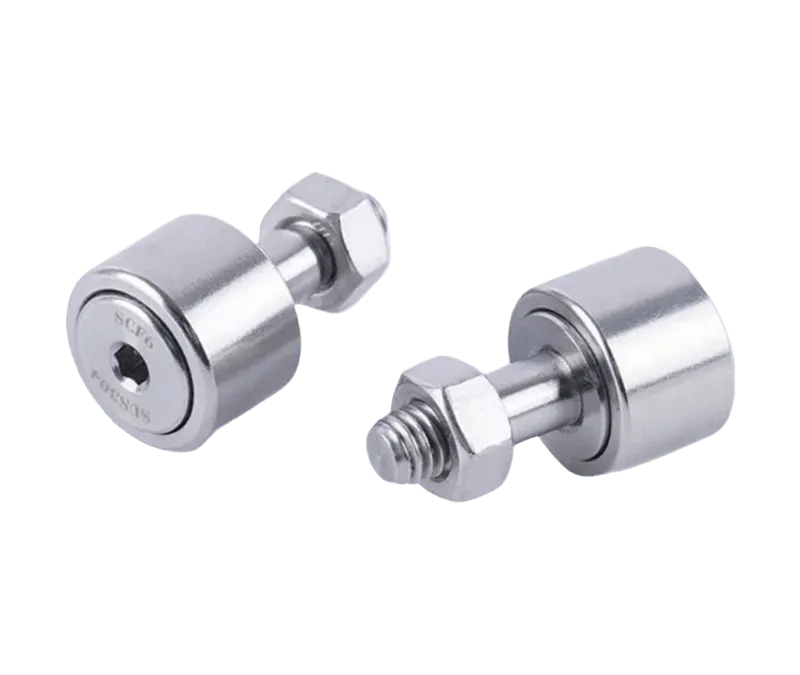
A cam follower is usually a track roller arranged to follow a cam, rail, slot or guide path. In many catalogs, a stud type cam follower is described as a stud type track roller because the roller is mounted on a threaded stud and runs directly against a mating track.
The difference matters because “track roller” can describe a broader family. Some track rollers are stud mounted, some are yoke mounted, and some are support rollers with an inner ring. The correct stainless part is defined by mounting style, outside diameter, stud or bore size, seal, outer profile, load and operating environment.
Why the terms overlap
The two names come from different ways of describing the same motion problem. “Cam follower” describes what the roller does: it follows a cam profile or controlled path. “Track roller” describes where the roller runs: on a rail, guideway, flat raceway or track surface.
SKF describes cam followers as stud-type track rollers used on tracks and in cam drives. Schaeffler groups track rollers, stud-type track rollers and cam rollers together, with thick outer rings and structures designed for cam mechanisms, guideways, conveying systems and linear guidance. IKO describes a cam follower as a bearing with needle rollers between a stud and a thick outer ring.
For LINOX, either term is understandable. The important step is to convert the name into the mounting and operating details.
Cam follower vs track roller comparison
| Point to compare | Cam follower | Track roller |
|---|---|---|
| Main meaning | Roller bearing used to follow a cam, guide slot, rail or controlled path | Broader roller family that runs on a track, rail, guideway or mating surface |
| Common mounting | Often stud type with a threaded stud | Can be stud type, yoke type or support roller style |
| Main search intent | Selecting a follower for a cam mechanism or guided motion | Selecting a roller for a track, rail, conveyor or guide system |
| Structure focus | Thick outer ring, rolling element set and stud | Thick outer ring, rolling element set, stud or inner ring depending on type |
| Typical series language | KR, KRV, KRE, KRVE, NUKR, NUKRE, PWKR, PWKRE | Track roller, stud type track roller, yoke type track roller, cam roller |
| Stainless review points | Outer ring hardness, stud material, seal, lubrication and corrosion exposure | Same review points, plus support style and mating track condition |
In practical sourcing, “cam follower vs track roller” is often a terminology check rather than a choice between unrelated parts. The real choice is stud type or yoke type, caged or full-complement rollers, sealed or open structure, concentric or eccentric stud, and the stainless material combination.
Mounting style is the first separator
The fastest way to separate the terms is to look at how the roller is mounted.
A stud type cam follower has a threaded stud that mounts into a plate, lever, carriage or machine frame. This is the common starting point for compact guided motion, cam drives, indexing equipment, packaging machinery and washdown machinery. The stud can be concentric or eccentric. Eccentric versions help adjust the roller position against the mating track during installation.
A yoke type track roller does not use the same threaded stud arrangement. It is normally supported on a shaft or pin between side supports. This structure is often reviewed when the assembly needs a different support arrangement or higher load distribution through the mounting. If the machine drawing shows a fork, side plates or a separate shaft, do not replace it only by searching for a stud type cam follower.
A support roller or ball bearing track roller may look similar from the outside, but the inner mounting detail changes the part family. That is why a photo alone is often not enough.
Motion path and load direction
Cam followers and track rollers both run with the outer ring in direct contact with a mating surface. The difference is usually the application language around that contact.
A cam follower is selected when the roller follows a shaped cam, curved profile, slot or repeated machine path. The load can change through the cycle, and the roller may see impact when it enters or leaves the loaded part of the cam profile.
A track roller is selected when the roller runs along a rail, guideway, conveyor track, door track or linear guide surface. The load path may be more continuous, but edge stress, track alignment, contamination and surface hardness still matter.
In both cases, the mating surface is part of the bearing system. A stainless roller cannot compensate for a soft, damaged, misaligned or corroded track for long. If the roller failed, review both the roller and the track surface before changing only the bearing.
Series names used in stainless cam followers
For LINOX stainless cam followers, the common starting point is stud type construction. The series name helps narrow the structure, but it does not replace dimensional confirmation.
| Series group | Common meaning | What to confirm |
|---|---|---|
| KR / KR..PP | Caged needle roller stud type cam followers | Roller diameter, stud thread, seal suffix, lubrication plan |
| KRV / KRV..PP | Full-complement needle roller stud type cam followers | Higher radial load need, speed limit, seal and relubrication access |
| KRE / KRVE | Eccentric stud versions of KR/KRV style families | Amount of adjustment needed against the track |
| NUKR / NUKRE | Heavier stud type track rollers for higher radial and shock load | Track load, stud support, installation clearance and sealing |
| PWKR / PWKRE..2RS | Sealed heavier track roller families | Contamination level, washdown exposure and seal suitability |
These names are useful only when paired with dimensions. For example, KR 30 and NUKR 35 are not interchangeable just because both may be called cam followers or track rollers. The outer diameter, stud size, width, load rating and internal structure are different.
Where stainless steel changes the selection
Many standard cam followers and track rollers use bearing steel or alloy steel with surface treatments. Those options can work in dry machinery, but washdown, outdoor exposure, food equipment, marine equipment and chemical splash can change the material decision.
LINOX focuses on stainless steel cam followers and related motion components for corrosive or frequently cleaned environments. In these parts, stainless selection is still a system decision.
| Component | Common stainless review | Why it matters |
|---|---|---|
| Outer ring | 420 or 440C stainless when rolling wear is critical | Needs hardness where the roller contacts the track |
| Stud | Stainless grade matched to load and corrosion exposure | Carries mounting load and thread engagement |
| Rolling elements | Hard stainless options for rolling contact | Controls wear, vibration and service life |
| Seals | PP, 2RS or custom sealing review | Limits splash, dust and washdown contamination |
| Track and hardware | Compatible track, nut, washer and bracket material | Prevents corrosion or wear from moving to adjacent parts |
For washdown machinery, do not choose only by the word “stainless.” Confirm whether the hard rolling contact surface, threaded stud, nut and mating track are also suitable for the environment. In some positions, 316 stainless may be reviewed for exposed hardware while a harder stainless grade is needed at the rolling contact surface.
Common application differences
In a cam drive, the roller follows a defined profile. The term cam follower is usually the natural wording. The selection should focus on roller diameter, internal structure, stud support, lubrication and whether the roller will see repeated impact at part of the cycle.
In a guide rail or conveyor path, the term track roller may be more common. The selection should focus on the rail material, alignment, contact width, contamination, seal, and whether the roller runs continuously or only during machine indexing.
In packaging or food machinery, both terms appear. A maintenance note may say “cam follower,” while the replacement catalog calls the part a stud type track roller. Treat the name as a clue, not a full specification.
In marine or outdoor equipment, corrosion can be the reason for switching from plated or bearing steel to stainless. The track and mounting hardware should be reviewed at the same time, otherwise the roller may improve while the surrounding assembly remains the weak point.
How to specify the part
Once the terminology is clear, specify the component by dimensions, mounting and operating conditions. The following details are usually enough for an initial review:
- Existing product name, series or part number.
- Roller outside diameter and width.
- Stud diameter, thread size and thread length for stud type rollers.
- Bore size, shaft size or support style for yoke type rollers.
- Open, PP seal, 2RS seal or existing seal structure.
- Concentric or eccentric stud requirement.
- Outer profile: crowned or cylindrical.
- Material preference: 420, 440C, 304, 316 or custom stainless combination.
- Track material, track hardness and whether the track is flat, curved or slotted.
- Operating environment: dry, washdown, food machinery, outdoor, salt spray or chemical exposure.
- Load direction, duty cycle, speed and whether shock load is present.
- Drawing, sample, photo and failure description if replacing an existing part.
If the same part is described under both names, write both terms in the request. For example: “stainless cam follower / stud type track roller replacement” followed by the roller diameter, stud thread, seal, material and application details.
Common points of confusion
A cam follower is not always a separate product family from a track roller. In many catalogs, a cam follower is a stud type track roller. The word “track roller” is broader, so it can also include yoke type or support roller arrangements.
Stud type and yoke type should not be mixed casually. The load support, mounting hardware and installation space are different. If the existing assembly uses side supports or a separate shaft, verify the construction before replacing it with a threaded stud type roller.
Open, PP and 2RS versions are not only naming suffixes. They affect contamination resistance, friction, relubrication and speed. For stainless washdown service, the seal and lubrication plan should be reviewed together with material.
How LINOX reviews the request
Use the term already used in your drawing, catalog or maintenance note, then define the roller like a mechanical component. For stainless cam followers and track rollers, the correct selection depends on mounting style, roller diameter, stud or bore size, seal, outer profile, load, track condition and exposure.
If the part may be a cam follower, track roller or guide roller, start with the stainless steel cam followers page and send the drawing or sample details through the inquiry form. For broader equipment context, review the industrial applications page before deciding whether material, sealing or track design is the main issue.
Reference notes
- SKF, Cam followers, for cam followers as stud-type track rollers used on tracks and in cam drives.
- Schaeffler, Track rollers, backup rollers and cam rollers, for track roller, yoke-type track roller, stud-type track roller and cam roller terminology.
- Schaeffler medias, Cam rollers, for stud type roller bearing track roller structure, crowned outer rings and eccentric collar adjustment.
- IKO International, Cam Followers, for needle roller cam follower structure, seal choices, eccentric styles and stainless versions.
- NTN Global, Cam Followers & Roller Followers catalog page, for the distinction between cam follower and roller follower catalog sections.